







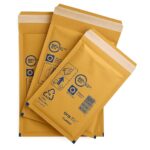
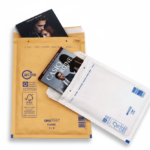
 Bubble Envelopes
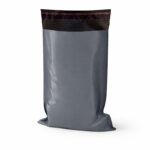 Mailing Bags
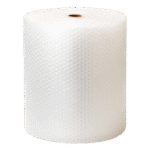 Bubble Wrap Rolls
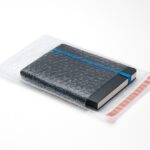 Bubble Wrap Bags
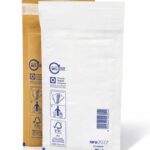 Bubble Envelopes
 ECOFLO Loose Fill Packing Peanuts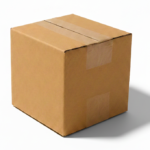
 Grip seal bags
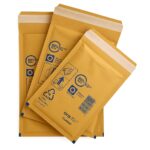 Arofol Bubble Bags
 Layflat Tubing Heavy duty
 Layflat Tubing Medium duty
Every ecommerce business faces the same fundamental packaging decision: how do you get your products to customers safely, affordably, and in a way that reflects well on your brand?
For many product types — particularly lighter, non-crushable items — the choice comes down to two formats: padded bubble envelopes or cardboard mailers. Both are widely used across UK ecommerce. Both have genuine advantages. But they suit different products, business priorities, and customer expectations in ways that are worth understanding before you commit to buying in bulk.
This guide covers everything you need to know to make the right call.
What Are Arofol Bubble Envelopes?
Arofol is one of the most recognised names in padded postal envelopes. Arofol bubble envelopes — like those available from Cloud Packaging — feature a kraft paper outer (available in gold/brown or white) with an inner lining of bubble wrap cushioning. They’re self-sealing with a peel-and-seal adhesive strip, and available in a range of standard sizes to accommodate products from small jewellery pieces up to A3 documents and boxed items.
Key characteristics:
- FSC-certified kraft paper outer (responsibly sourced)
- Bubble wrap inner lining for cushioning against impacts and vibration
- Lightweight — adds minimal weight to the shipment
- Peel-and-seal closure — quick to pack and seal
- Available in gold (classic kraft) and white (cleaner, premium-look) finishes
- Sized to align with Royal Mail’s Pricing in Proportion (PiP) guidelines, helping keep postage costs predictable
What Are Cardboard Mailers?
Cardboard mailers are rigid or semi-rigid postal boxes made from corrugated or solid board. They provide a firm, crush-resistant outer shell that protects contents from compression — particularly useful for items that cannot be bent or squashed. Unlike bubble envelopes, cardboard mailers offer structural rigidity rather than cushioned flexibility.
Cloud Packaging’s cardboard boxes range covers a wide variety of sizes suited to ecommerce dispatch, from small single-item mailers to larger multi-item cartons.
Head-to-Head Comparison
Protection Type
Arofol bubble envelopes protect against impact, vibration, and surface damage through their bubble lining. The cushioning absorbs shocks during handling and transit. However, they’re flexible — meaning a heavy external force (such as being crushed under other parcels) could compress the envelope and affect the contents.
Cardboard mailers protect through rigidity. They resist compression and maintain their shape under stacking weight, making them the better choice for items that must not be bent, crushed, or deformed — books, prints, framed artwork, rigid packaging, and boxed goods.
The key difference: bubble envelopes cushion; cardboard mailers protect structure. These are different problems requiring different solutions.
Weight and Postage Cost
This is where bubble envelopes hold a significant advantage for ecommerce businesses. Arofol envelopes are very lightweight, adding minimal grams to a shipment. For businesses dispatching high volumes via Royal Mail or courier, keeping each parcel’s weight down directly reduces postage spend.
Cardboard boxes add more weight, particularly double-walled or heavy-duty variants. For lightweight products, a cardboard mailer may push a parcel into the next Royal Mail weight tier unnecessarily — a cost that compounds across hundreds of orders per week.
For small, lightweight products that don’t require structural protection, Arofol envelopes are typically more cost-effective to post.
Speed of Packing
Bubble envelopes are fast. Drop the product in, peel the strip, seal, and label. For high-volume ecommerce fulfilment, this simplicity is a genuine operational advantage — particularly compared to erecting and taping cardboard boxes.
Cardboard mailers require folding, taping (with packaging tape), and more careful packing to ensure contents are secure. This adds seconds per parcel — which can become meaningful at scale.
Brand Presentation
Both formats offer branding opportunities, but they create different impressions.
Arofol white envelopes deliver a clean, contemporary unboxing experience. The white exterior is well-suited to businesses that apply branded stickers or labels and want a professional, modern look in the letterbox. White Arofol envelopes in particular stand out from the typical brown postal items that customers receive.
Gold/kraft Arofol envelopes convey a reliable, eco-conscious aesthetic that suits brands with a natural or sustainable identity.
Cardboard boxes offer the most scope for branded packaging — printed boxes, tissue paper, inserts, and branded tape all create a more premium unboxing experience. For higher-value products or gifting-orientated businesses, this matters.
Storage and Space
Arofol envelopes lay flat and stack easily. A significant quantity takes up a fraction of the warehouse or stockroom space that an equivalent number of cardboard boxes would. For smaller businesses working from home or with limited storage, this is a practical consideration.
Flat-pack cardboard boxes are reasonably compact, but they still occupy more space than padded envelopes, and they require assembly before use.
Sustainability
Both formats have eco-credentials worth noting. Arofol’s kraft paper outer is FSC-certified from responsibly managed forests. The bubble lining is polyethylene — technically recyclable, but not in most kerbside collections.
Cardboard mailers are generally more straightforwardly recyclable, as corrugated board is one of the most widely accepted materials in UK kerbside collections. For businesses where end-of-life recyclability for the customer is a priority, cardboard has an edge.
Which Products Suit Each Format?
Arofol Bubble Envelopes Work Well For:
- Jewellery, accessories, and small fashion items
- Small electronics, phone accessories, cables, and peripherals
- Books, documents, and printed materials that need minor protection but not rigid support
- Cosmetics, beauty products, and health supplements in sturdy packaging
- Craft supplies, art materials, and hobby products
- CD/DVD/gaming media
- Any lightweight product where postage cost efficiency matters
Cardboard Mailers/Boxes Work Well For:
- Items that must not be bent under any circumstances (prints, posters, artwork)
- Products in their own retail packaging that need structural protection (boxed goods)
- Heavier items where cardboard’s rigidity provides meaningful support
- Breakable items where bubble fill plus a rigid outer shell is required
- Multi-item orders where several products need to be packed together securely
What About Mailing Bags?
It’s worth noting that for non-fragile, soft, or flexible products — clothing, textiles, soft toys — neither bubble envelopes nor cardboard boxes are necessary. Lightweight mailing bags are the most cost-effective option, available in standard white, pink, and blue from Cloud Packaging. They add negligible weight, seal quickly, and keep postage costs to a minimum for non-fragile dispatches.
For electronics specifically, anti-static bubble bags offer the surface protection of bubble wrap with the convenience of a pre-formed bag — and the anti-static lining protects sensitive components from electrostatic discharge.
Quick Decision Guide
| Product Type | Recommended Format |
|---|---|
| Jewellery, small accessories | Arofol bubble envelope |
| Books, documents | Arofol bubble envelope or cardboard mailer (if rigid protection needed) |
| Unboxed electronics/accessories | Arofol bubble envelope or anti-static bubble bags |
| Prints, artwork, posters | Cardboard mailer (rigid protection essential) |
| Boxed retail products | Cardboard mailer |
| Clothing, soft goods | Mailing bags |
| High-value gifting orders | Cardboard box (with branded inserts) |
Summary
Arofol bubble envelopes and cardboard mailers each serve a clear purpose in ecommerce packaging. Bubble envelopes win on weight, packing speed, storage efficiency, and postage cost — making them the right default for lightweight, non-crushable products. Cardboard mailers win on structural rigidity and recyclability, making them essential for products that can’t be compressed or bent.
Most ecommerce businesses benefit from stocking both — using bubble envelopes as the everyday format and cardboard mailers for orders that genuinely need them.
Explore Cloud Packaging’s Arofol Bubble Envelopes and Cardboard Boxes, both available with free UK delivery.