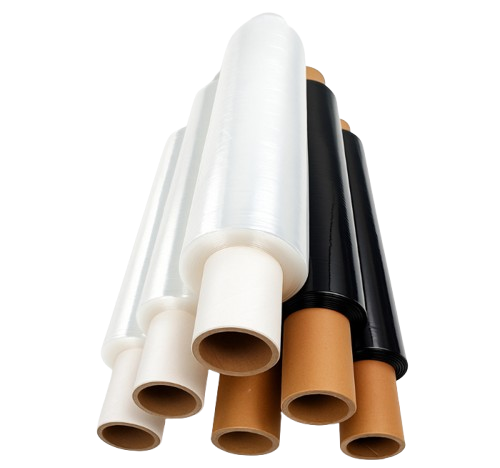
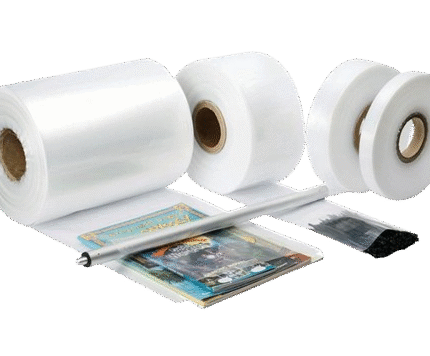
Hand pallet wrap and stretch film for securing and protecting palletised loads during storage and transit available in flush and extended core formats to suit all manual wrapping methods.
Applied by hand or using a dispenser for increased efficiency
Cast film construction for high clarity and strong tensile strength
Super-strength films with film savings of up to 50%
Available in flush core (dispenser-applied) and extended core (freehand application) formats
Eco-friendly, containing 30% recycled content
Please note: For orders of 1+ pallet, please allow 5 working days for delivery.
£30.32–£32.00Price range: £30.32 through £32.00 ex. VAT
If you’ve ever watched a warehouse operative walk circles around a pallet unspooling clear film, you’ve seen hand pallet wrap in action. It looks simple and in practice it is but there’s more to choosing and using the right stretch film than most businesses realise.
Get it wrong and you end up with shifting loads, film waste, damaged goods, or injured staff. Get it right and pallet wrapping becomes one of the most cost-effective, reliable ways to protect goods in transit and storage.
This guide covers everything you need to know: what hand pallet wrap is, how micron ratings work, how stretch percentage affects performance, and how to choose the right film for your loads.
What Is Hand Pallet Wrap?
Hand pallet wrap — also called hand stretch film or manual pallet wrap is a thin, elastic plastic film applied by hand (with or without a dispenser) around palletised goods to secure them. It’s typically made from LLDPE (Linear Low-Density Polyethylene), a material chosen for its excellent elongation properties, cling, and puncture resistance.
When applied, the film is stretched around the load. As it contracts slightly, it creates holding pressure that keeps boxes, cartons, bags, and other items from shifting, toppling, or separating during movement. It also provides a degree of protection against dust, moisture, and contamination.
Cloud Packaging’s hand pallet wrap is available in flush core and extended core formats, in grades ranging from 17 to 30 microns, with 30% recycled content and can be applied by hand or with a dispenser.
Understanding Microns: What Does Film Thickness Actually Mean?
Micron (abbreviated as µm or “mu”) refers to the thickness of the stretch film. One micron equals one-thousandth of a millimetre (0.001mm). The higher the micron rating, the thicker and stronger the film.
Here’s a practical breakdown of what different micron ratings mean for your application:
Micron Rating
Use Case
12–15 µm
Light loads, stable boxes, short-distance storage
17–20 µm
Medium-weight loads, standard UK pallet shipments
23–25 µm
Heavy loads, mixed products, longer transit
28–30 µm
Very heavy, sharp-edged, or high-risk loads
Cloud Packaging’s hand pallet wrap range runs from 17 to 30 microns, covering the full spectrum of standard hand-wrapping needs. For most UK businesses dispatching palletised goods, a 20–23 micron film strikes a sensible balance between performance and material use.
It’s worth noting that a higher micron doesn’t automatically mean “better” it means more material. Choosing a film that’s heavier than your load demands wastes plastic and increases cost. Matching micron to load type is the smarter approach.
What Is Stretch Percentage and Why Does It Matter?
Stretch percentage refers to how much the film elongates relative to its original length before it’s applied. This is one of the most important (and most misunderstood) properties of stretch film.
Standard hand pallet wrap typically offers a stretch capability of 150–200%. This means a roll of film can be extended to 2.5 to 3 times its original length before breaking.
Higher stretch means:
More film coverage per roll (fewer roll changes, less waste)
Better load containment force as the contracted film “grips” the pallet
Reduced material cost per pallet wrapped
However, over-stretching particularly with thinner films risks tearing and reduces the film’s ability to recover and hold tension. The key is applying the right amount of tension consistently.
Pre-stretched film is an alternative worth knowing about. In pre-stretched wrap, the film is already extended during manufacture, so the operative applies far less physical force during wrapping. This reduces fatigue, particularly during high-volume packing sessions, and delivers consistent tension without risk of tearing.
Load Stability: What Factors Affect It?
Applying stretch film isn’t just about getting the roll around the pallet the method matters enormously for achieving genuine load stability.
1. Wrap Pattern Start at the base of the pallet, securing the film to the foot of the load. Work upward in overlapping passes (typically 50% overlap per layer) before wrapping back down. This creates a “rope” of reinforcement at the base and top edges where loads most commonly fail.
2. Number of Layers Heavier or taller loads require more film layers, particularly around the base and across any weight distribution points. Two to four wraps of a 20–23 micron film is standard for a well-loaded pallet.
3. Film Tension Too little tension and the film won’t hold the load. Too much and you risk tearing, particularly at corners. A dispenser helps regulate tension, making it easier to apply consistent, even pressure throughout.
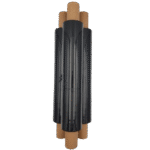
4. Core Type: Flush vs Extended Cloud Packaging offers both flush core and extended core options. An extended core provides a built-in handle, making it significantly easier to grip and apply reducing hand fatigue and improving wrapping speed, particularly for less experienced operatives.
5. Load Condition Stretch film can only do so much. A poorly stacked pallet with uneven weight distribution, overhanging boxes, or unstable base layers will still shift regardless of how well it’s wrapped. Film is the final security measure, not a substitute for correct palletisation.
Flush Core vs Extended Core: What’s the Difference?
Feature
Flush Core
Extended Core
Core type
Standard cardboard core, flush with film edge
Extended cardboard handles that protrude from each side
Ease of use
Requires a separate hand dispenser for comfortable use
Built-in handles for direct hand application
Best for
Businesses with dispensers; higher-volume wrapping
Occasional use, smaller operations, or no-dispenser environments
Comfort
Less hand fatigue when used with a dispenser
Reduces film-on-hand discomfort without a dispenser
Cloud Packaging carries both formats, allowing you to match the product to your operation.
Does Recycled Content Affect Performance?
Cloud Packaging’s hand pallet wrap contains 30% recycled content a feature increasingly sought by businesses working toward sustainability targets and compliance with Extended Producer Responsibility (EPR) regulations in the UK.
In practice, modern recycled-content stretch films perform comparably to virgin LLDPE films within the same micron range. The recycled content doesn’t compromise tensile strength, cling, or stretch capability at the grades Cloud Packaging supplies.
Using a film with recycled content reduces your plastic packaging footprint, which matters both for environmental reasons and for compliance with evolving UK packaging legislation.
Can You Use Hand Pallet Wrap Without a Dispenser?
Yes, particularly with extended core rolls, which are designed for direct hand application. That said, a hand dispenser offers real practical advantages:
Controls film tension more consistently
Reduces physical strain on the wrists and hands
Allows faster wrapping with less effort
Helps avoid the common mistake of applying film too loosely
For any business wrapping more than a handful of pallets per day, a dispenser is a worthwhile investment. Cloud Packaging’s hand pallet wrap is compatible with standard hand dispensers.
Quick-Reference: Choosing the Right Film
Choose 17 micron if: You’re wrapping light, stable, uniformly shaped loads for short-distance movement or indoor storage.
Choose 20–23 micron if: You’re shipping standard pallets via courier or road freight this covers the majority of UK business use cases.
Choose 25–30 micron if: Your loads are heavy, contain sharp-edged products (like metal components or timber), or need to withstand longer transit and multiple handling points.
Choose extended core if: You’re wrapping without a dispenser or need a solution your team can pick up and use immediately with minimal training.
Summary
Hand pallet wrap is a deceptively simple product with meaningful variation in thickness, stretch capability, core type, and material composition. Getting the specification right means your loads arrive intact, your film usage stays controlled, and your team wraps efficiently without fatigue.
Cloud Packaging’s hand pallet wrap range — 17 to 30 microns, flush and extended core, with 30% recycled content covers the full range of standard business needs, with free UK delivery on every order.
For most standard road freight and courier pallets in the UK, a 20–23 micron hand stretch film is the most appropriate choice. It provides a reliable balance of strength, stretch, and material efficiency for mixed loads of average weight. Lighter, stable loads on shorter journeys can be wrapped with 17 micron film, while heavy, sharp-edged, or high-risk loads warrant stepping up to 25–30 micron.
Flush core rolls have a standard cardboard core that sits flush with the edges of the film, requiring a hand dispenser for comfortable application. Extended core rolls feature cardboard handles that protrude from each side, allowing the operative to grip and apply the film directly by hand without any additional equipment. Extended core is the more user-friendly option for businesses that don't use dispensers or need a solution that's quick to pick up and use with minimal training.
Most standard pallets require two to four wraps of film per pass, with the base of the load receiving additional attention as this is where loads most commonly fail. The exact number depends on load weight, height, and how far the pallet is travelling. Heavier or taller loads, or those going through multiple handling points, benefit from extra passes — particularly around the bottom third of the pallet where stress is greatest.
At the grades supplied by Cloud Packaging (17–30 microns with 30% recycled content), performance is comparable to virgin LLDPE film. Modern manufacturing processes ensure that recycled-content stretch film retains the tensile strength, cling, and stretch capability needed for effective pallet wrapping. Using recycled-content film also helps businesses meet sustainability targets and supports compliance with UK Extended Producer Responsibility (EPR) packaging regulations.
Not necessarily — extended core rolls are specifically designed for direct hand application without a dispenser. However, for any business wrapping more than a few pallets per day, a hand dispenser is strongly recommended. It regulates film tension more consistently, reduces wrist and hand strain significantly, speeds up the wrapping process, and helps avoid the common issue of film applied too loosely to hold the load securely.
Learn what a packing slip is, what to include, how it differs from a shipping label and invoice, and how UK ecommerce sellers can use it to check orders.
Not sure whether you need 4 x 6 or A4 shipping labels? Compare label sizes, printers and UK postage workflows before choosing your next shipping labels.








 Bubble Envelopes
 Mailing Bags
 Bubble Wrap Rolls
 Bubble Wrap Bags
 Bubble Envelopes
 ECOFLO Loose Fill Packing Peanuts
 Grip seal bags
 Arofol Bubble Bags
 Layflat Tubing Heavy duty
 Layflat Tubing Medium duty